
Fuel Management Software for Corporate Fleets
Fuel Management Software for Corporate Fleets
Fuel Management Software for Corporate Fleets
Fleeti cross-references your engine data, fuel tank levels, and fuel card transactions in real time to manage your fleet’s fuel consumption down to the individual vehicle. You’ll save 15 to 25% on your fuel bill, immediately detect phantom refills and siphoning theft, and track your Scope 1 emissions without manual data entry.
Fleeti cross-references your engine data, fuel tank levels, and fuel card transactions in real time to manage your fleet’s fuel consumption down to the individual vehicle. You’ll save 15 to 25% on your fuel bill, immediately detect phantom refills and siphoning theft, and track your Scope 1 emissions without manual data entry.
Schedule a demo

Fuel Management Software for Corporate Fleets
Fleeti cross-references your engine data, fuel tank levels, and fuel card transactions in real time to manage your fleet’s fuel consumption down to the individual vehicle. You’ll save 15 to 25% on your fuel bill, immediately detect phantom refills and siphoning theft, and track your Scope 1 emissions without manual data entry.
Schedule a demo
Cut your fuel bill by 15 to 25%
Cut your fuel bill by 15 to 25%
Cut your fuel bill by 15 to 25%
Fuel accounts for between 20% and 30% of the total cost of ownership for a corporate fleet, making it the second-largest expense after payroll. Fleeti continuously identifies vehicles that consume more fuel than the fleet average, drivers with costly driving habits, and the routes that consume the most fuel.
Fuel accounts for between 20% and 30% of the total cost of ownership for a corporate fleet, making it the second-largest expense after payroll. Fleeti continuously identifies vehicles that consume more fuel than the fleet average, drivers with costly driving habits, and the routes that consume the most fuel.
You automatically cross-reference engine data (instantaneous fuel consumption, idle speed, speed) with your fuel card transactions and actual mileage. Every discrepancy is tracked, dated, geolocated, and displayed in an exportable dashboard.
You automatically cross-reference engine data (instantaneous fuel consumption, idle speed, speed) with your fuel card transactions and actual mileage. Every discrepancy is tracked, dated, geolocated, and displayed in an exportable dashboard.
For a fleet of 100 vehicles, a 15% savings translates to tens of thousands of euros in fuel not consumed each year. You can make informed decisions about your fleet policies based on reliable data and justify every euro to your finance department.
For a fleet of 100 vehicles, a 15% savings translates to tens of thousands of euros in fuel not consumed each year. You can make informed decisions about your fleet policies based on reliable data and justify every euro to your finance department.
Detect phantom refills and siphoning theft
Detect phantom refills and siphoning theft
Detect phantom refills and siphoning theft
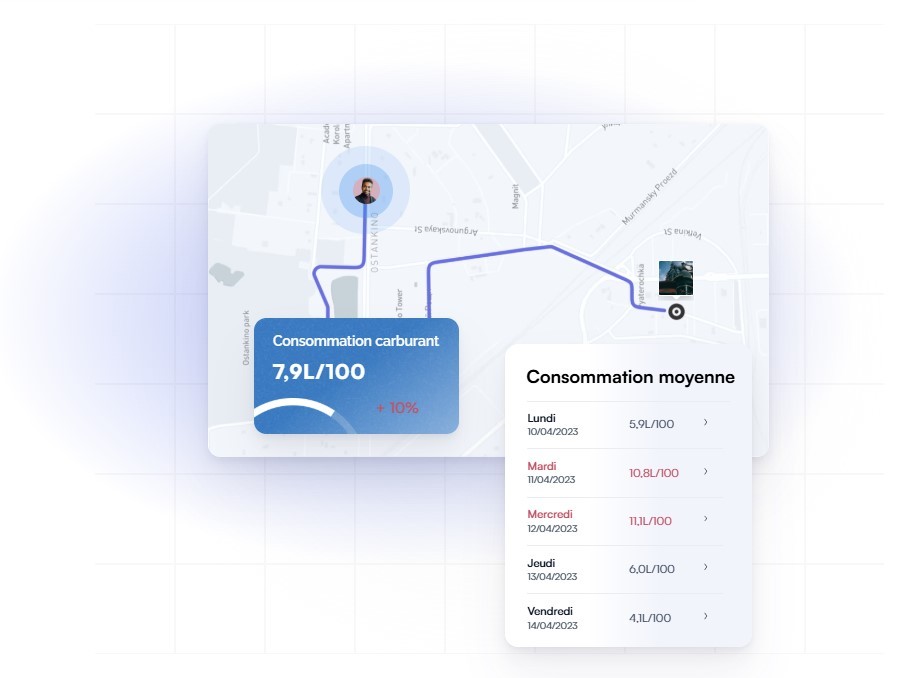
Fuel theft accounts for more than hundreds of millions of liters of diesel stolen each year. Construction and heavy-duty truck fleets parked outside secure sites are the most vulnerable.
Fuel theft accounts for more than hundreds of millions of liters of diesel stolen each year. Construction and heavy-duty truck fleets parked outside secure sites are the most vulnerable.
Fleeti continuously monitors fuel levels using the CAN bus in newer vehicles and capacitive sensors in construction equipment and older heavy-duty trucks. Any sudden drop in fuel level between trips immediately triggers an alert to the manager and the driver.
Fleeti continuously monitors fuel levels using the CAN bus in newer vehicles and capacitive sensors in construction equipment and older heavy-duty trucks. Any sudden drop in fuel level between trips immediately triggers an alert to the manager and the driver.
Each fuel card transaction is then cross-referenced with the vehicle’s GPS location at the time of refueling. A transaction where no vehicle is present at the gas station, or one involving a volume that does not match the tank’s capacity, is flagged as an anomaly. You have time-stamped and geolocated evidence for any report to your insurer or law enforcement.
Each fuel card transaction is then cross-referenced with the vehicle’s GPS location at the time of refueling. A transaction where no vehicle is present at the gas station, or one involving a volume that does not match the tank’s capacity, is flagged as an anomaly. You have time-stamped and geolocated evidence for any report to your insurer or law enforcement.
Track reliable costs per kilometer and per liter
Track reliable costs per kilometer and per liter
Track reliable costs per kilometer and per liter
Self-reported metrics are unreliable: manually entered mileage, re-entered fuel receipts, and drivers interviewed after the fact. Fleeti provides your finance department with measured data that is comparable month-to-month and auditable line by line.
Self-reported metrics are unreliable: manually entered mileage, re-entered fuel receipts, and drivers interviewed after the fact. Fleeti provides your finance department with measured data that is comparable month-to-month and auditable line by line.
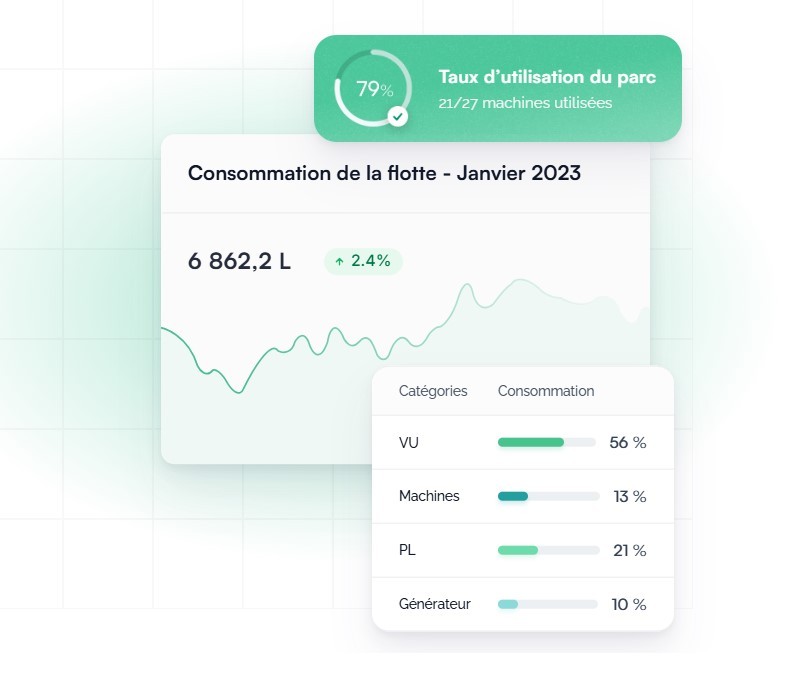
You can view the actual fuel cost—in euros per kilometer, liters per 100 kilometers, and fuel consumption per hour of engine operation for machinery—by vehicle, by driver, and by location. Internal benchmarks (top 10%, median, bottom 10%) are calculated automatically, without any configuration.
You can view the actual fuel cost—in euros per kilometer, liters per 100 kilometers, and fuel consumption per hour of engine operation for machinery—by vehicle, by driver, and by location. Internal benchmarks (top 10%, median, bottom 10%) are calculated automatically, without any configuration.
You identify the vehicles to be evaluated (for renewal, repositioning, or decommissioning), document your decisions with your executive committee, and track the impact of your action plans on your fleet’s total cost of ownership.
You identify the vehicles to be evaluated (for renewal, repositioning, or decommissioning), document your decisions with your executive committee, and track the impact of your action plans on your fleet’s total cost of ownership.
Be sure to also measure older equipment and fleets
Be sure to also measure older equipment and fleets
Be sure to also measure older equipment and fleets
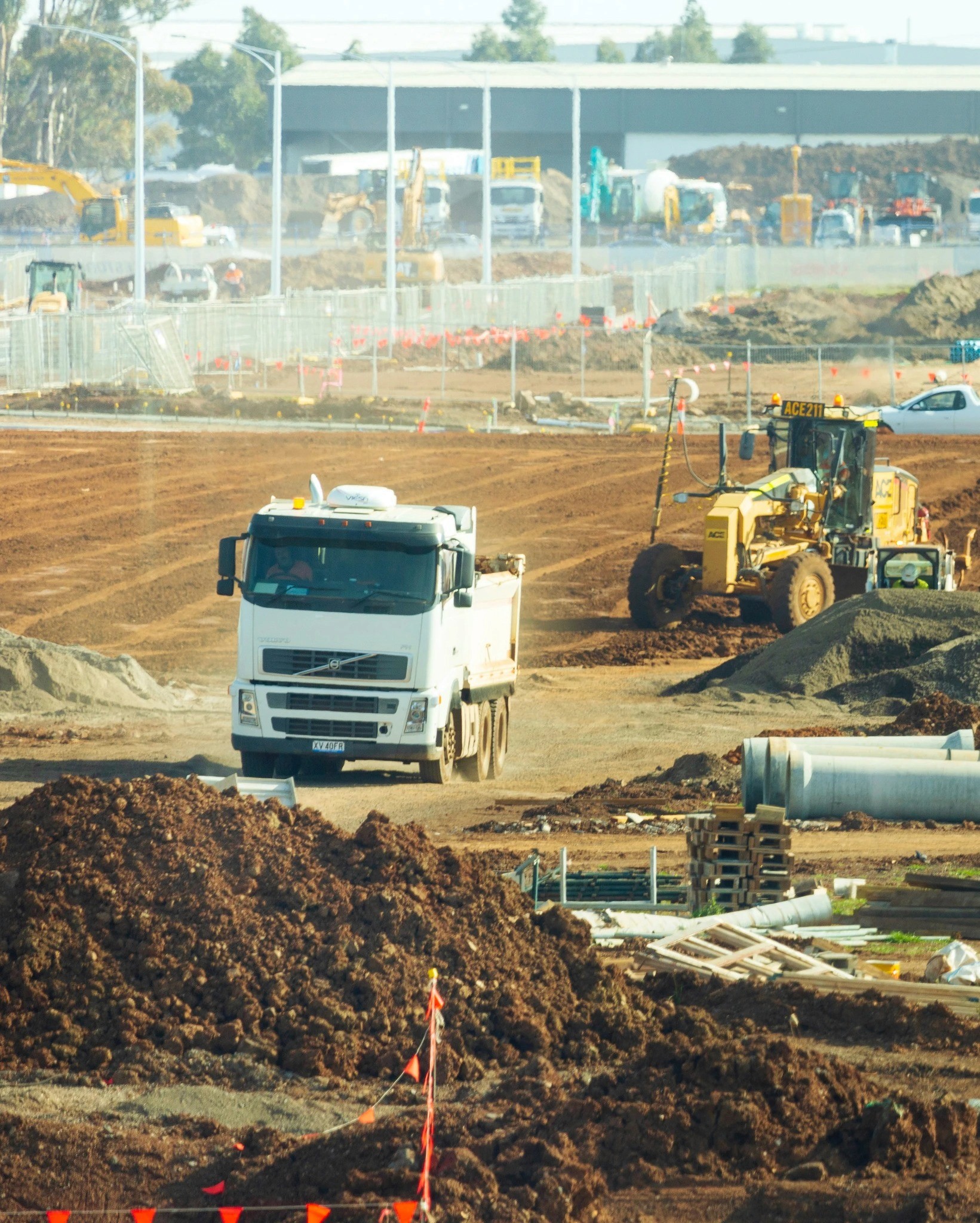
Reading engine data via the CAN bus works only on newer vehicles equipped with the FMS protocol. Mixed fleets (construction equipment running on GNR, older heavy-duty trucks, and short-term rental commercial vehicles) require a hybrid approach.
Reading engine data via the CAN bus works only on newer vehicles equipped with the FMS protocol. Mixed fleets (construction equipment running on GNR, older heavy-duty trucks, and short-term rental commercial vehicles) require a hybrid approach.
Fleeti offers a solution tailored to each vehicle type: CAN bus connectivity for newer vehicles, capacitive tank sensors for construction equipment and heavy-duty trucks, and integration of fuel cards for service sector fleets without onboard telematics.
Fleeti offers a solution tailored to each vehicle type: CAN bus connectivity for newer vehicles, capacitive tank sensors for construction equipment and heavy-duty trucks, and integration of fuel cards for service sector fleets without onboard telematics.
You get a comprehensive view of your fuel consumption, regardless of your vehicles’ age, fuel type (gasoline, diesel, GNR, hybrid, electric), or ownership status (owned, long-term lease, short-term lease).
You get a comprehensive view of your fuel consumption, regardless of your vehicles’ age, fuel type (gasoline, diesel, GNR, hybrid, electric), or ownership status (owned, long-term lease, short-term lease).
Automatically populate your Scope 1 CO₂ reporting
Automatically populate your Scope 1 CO₂ reporting
Every liter of fuel burned by your fleet represents a greenhouse gas emission that is accounted for in your Scope 1—the direct carbon scope as defined by the GHG Protocol. The accuracy of fuel measurement directly affects the accuracy of your carbon footprint assessment and your CSRD reporting.
Every liter of fuel burned by your fleet represents a greenhouse gas emission that is accounted for in your Scope 1—the direct carbon scope as defined by the GHG Protocol. The accuracy of fuel measurement directly affects the accuracy of your carbon footprint assessment and your CSRD reporting.
Fleeti automatically converts each measured liter into CO₂ equivalent emissions, based on current emission factors. The details are broken down by vehicle, location, and fuel type, and can be exported in a format compatible with your ESG assessment software.
Fleeti automatically converts each measured liter into CO₂ equivalent emissions, based on current emission factors. The details are broken down by vehicle, location, and fuel type, and can be exported in a format compatible with your ESG assessment software.
You turn your fuel tracking into a measurable ESG metric, document your fleet’s decarbonization trajectory for your stakeholders, and base your electrification decisions on objective data.
You turn your fuel tracking into a measurable ESG metric, document your fleet’s decarbonization trajectory for your stakeholders, and base your electrification decisions on objective data.

Schedule a demo
Key Figures for Fuel Management in Corporate Fleets
Key Figures for Fuel Management in Corporate Fleets
Key Figures for Fuel Management in Corporate Fleets

15 to 25%
15 to 25%
Typical savings on fuel costs observed after a company implements fuel management software.
20 to 30%
20 to 30%
20 to 30%
Fuel accounts for a significant portion of the total cost of ownership of a fleet, ranking second only to payroll expenses.
90%
90%
90%
Réduction du nombre de vols de carburant dans les entreprises suite au déploiement du système.
1 950 €
1 950 €
1 950 €
average annual savings per vehicle observed in fleets equipped with a telematics-based fuel monitoring solution.
Fuel used
Fuel used
Fuel used
Total fuel consumed, broken down into fuel burned while driving and fuel burned while the engine is running but the vehicle is stationary (idling, PTO). Measurement obtained from the CAN bus or the tank's capacitive sensors, depending on the vehicle type.
Total fuel consumed, broken down into fuel burned while driving and fuel burned while the engine is running but the vehicle is stationary (idling, PTO). Measurement obtained from the CAN bus or the tank's capacitive sensors, depending on the vehicle type.
Total fuel consumed, broken down into fuel burned while driving and fuel burned while the engine is running but the vehicle is stationary (idling, PTO). Measurement obtained from the CAN bus or the tank's capacitive sensors, depending on the vehicle type.
Consommation moyenne
Consommation moyenne
Consommation moyenne
Liters per 100 kilometers for road vehicles; liters per hour of engine operation for construction equipment. Automatic comparison with the fleet median and with the manufacturer's reference data.
Liters per 100 kilometers for road vehicles; liters per hour of engine operation for construction equipment. Automatic comparison with the fleet median and with the manufacturer's reference data.
Liters per 100 kilometers for road vehicles; liters per hour of engine operation for construction equipment. Automatic comparison with the fleet median and with the manufacturer's reference data.
Tank Level
Tank Level
Tank Level
Real-time fuel level in the tank, with a history of fluctuations. Automatic detection of abnormal drops between trips and refueling amounts that do not match the technical capacity.
Real-time fuel level in the tank, with a history of fluctuations. Automatic detection of abnormal drops between trips and refueling amounts that do not match the technical capacity.
Real-time fuel level in the tank, with a history of fluctuations. Automatic detection of abnormal drops between trips and refueling amounts that do not match the technical capacity.
Cost per kilometer and per liter
Cost per kilometer and per liter
Cost per kilometer and per liter
Actual fuel cost in euros per kilometer and average price per liter paid, calculated by cross-referencing engine data with your fuel card transactions. Can be exported by vehicle, driver, location, or time period.
Actual fuel cost in euros per kilometer and average price per liter paid, calculated by cross-referencing engine data with your fuel card transactions. Can be exported by vehicle, driver, location, or time period.
Actual fuel cost in euros per kilometer and average price per liter paid, calculated by cross-referencing engine data with your fuel card transactions. Can be exported by vehicle, driver, location, or time period.
How Our Fuel Management Software Works
The Fleeti measurement chain combines onboard hardware, fuel card integrations, and anomaly detection algorithms. Four steps, from data collection to display on your dashboard.
01
01
Measurement of Engine and Fuel Tank Data
Measurement of Engine and Fuel Tank Data
Measurement of Engine and Fuel Tank Data
The Fleeti telematics unit continuously collects engine data via the CAN bus or the OBD port on newer vehicles. On older vehicles and heavy-duty trucks, a capacitive sensor installed inside the tank directly measures the fuel level, independent of the original engine control unit.
The Fleeti telematics unit continuously collects engine data via the CAN bus or the OBD port on newer vehicles. On older vehicles and heavy-duty trucks, a capacitive sensor installed inside the tank directly measures the fuel level, independent of the original engine control unit.
The Fleeti telematics unit continuously collects engine data via the CAN bus or the OBD port on newer vehicles. On older vehicles and heavy-duty trucks, a capacitive sensor installed inside the tank directly measures the fuel level, independent of the original engine control unit.
02
02
Integration of Fuel Cards
Integration of Fuel Cards
Integration of Fuel Cards
Your fuel card transactions are automatically synced with Fleeti, regardless of your provider. Each refueling is linked to the relevant vehicle, geotagged to its location at the time of the transaction, and compared to the tank’s technical capacity.
Your fuel card transactions are automatically synced with Fleeti, regardless of your provider. Each refueling is linked to the relevant vehicle, geotagged to its location at the time of the transaction, and compared to the tank’s technical capacity.
Your fuel card transactions are automatically synced with Fleeti, regardless of your provider. Each refueling is linked to the relevant vehicle, geotagged to its location at the time of the transaction, and compared to the tank’s technical capacity.
03
03
Automatic Anomaly Detection
Automatic Anomaly Detection
Automatic Anomaly Detection
Ten types of discrepancies identified in real time: a sudden drop in the fuel level between two trips; refueling outside an authorized geographic area; refueling outside of working hours; a fuel card transaction without GPS data showing the vehicle’s presence at the station; a transaction volume inconsistent with the tank’s technical capacity; persistent excess fuel consumption by a vehicle compared to the fleet median; excessive idling time during a trip; discrepancy between reported and measured mileage; refueling performed by a driver not authorized to operate the vehicle; abnormally frequent refueling. Each anomaly triggers an alert to the manager and the driver.
Ten types of discrepancies identified in real time: a sudden drop in the fuel level between two trips; refueling outside an authorized geographic area; refueling outside of working hours; a fuel card transaction without GPS data showing the vehicle’s presence at the station; a transaction volume inconsistent with the tank’s technical capacity; persistent excess fuel consumption by a vehicle compared to the fleet median; excessive idling time during a trip; discrepancy between reported and measured mileage; refueling performed by a driver not authorized to operate the vehicle; abnormally frequent refueling. Each anomaly triggers an alert to the manager and the driver.
Ten types of discrepancies identified in real time: a sudden drop in the fuel level between two trips; refueling outside an authorized geographic area; refueling outside of working hours; a fuel card transaction without GPS data showing the vehicle’s presence at the station; a transaction volume inconsistent with the tank’s technical capacity; persistent excess fuel consumption by a vehicle compared to the fleet median; excessive idling time during a trip; discrepancy between reported and measured mileage; refueling performed by a driver not authorized to operate the vehicle; abnormally frequent refueling. Each anomaly triggers an alert to the manager and the driver.
04
04
Reporting in the dashboard
Reporting in the dashboard
Reporting in the dashboard
All data is displayed on the Fleeti platform: route maps, fuel level charts, refueling history, driver rankings, and cost per kilometer by vehicle. Reports can be exported to your finance department and for your ESG reporting.
All data is displayed on the Fleeti platform: route maps, fuel level charts, refueling history, driver rankings, and cost per kilometer by vehicle. Reports can be exported to your finance department and for your ESG reporting.
All data is displayed on the Fleeti platform: route maps, fuel level charts, refueling history, driver rankings, and cost per kilometer by vehicle. Reports can be exported to your finance department and for your ESG reporting.
Which measurement method should you choose: CAN bus, sensor, or self-reported?
The measurement method depends on your fleet type, the age of your vehicles, and the importance of fuel costs to your business. There are three approaches—which are complementary rather than competing—that should be combined according to the needs of each vehicle category.
CAN bus / OBD
CAN bus / OBD
CAN bus / OBD
Directly reads data from the vehicle's ECU via the CAN bus or the OBD port. High engine accuracy (instantaneous fuel consumption, engine speed, idle speed, vehicle speed). Quick installation in less than one hour per vehicle.
Directly reads data from the vehicle's ECU via the CAN bus or the OBD port. High engine accuracy (instantaneous fuel consumption, engine speed, idle speed, vehicle speed). Quick installation in less than one hour per vehicle.
Directly reads data from the vehicle's ECU via the CAN bus or the OBD port. High engine accuracy (instantaneous fuel consumption, engine speed, idle speed, vehicle speed). Quick installation in less than one hour per vehicle.
For recent passenger cars and light commercial vehicles equipped with FMS
For recent passenger cars and light commercial vehicles equipped with FMS
For recent passenger cars and light commercial vehicles equipped with FMS
Capacitive sensor
Capacitive sensor
Capacitive sensor
Sensor installed directly in the tank, measuring the fuel level independently of the vehicle. High tank accuracy even on machinery, older vehicles, and mixed fleets.
Sensor installed directly in the tank, measuring the fuel level independently of the vehicle. High tank accuracy even on machinery, older vehicles, and mixed fleets.
Sensor installed directly in the tank, measuring the fuel level independently of the vehicle. High tank accuracy even on machinery, older vehicles, and mixed fleets.
For the construction industry, long-distance transportation, and areas with a high risk of theft
For the construction industry, long-distance transportation, and areas with a high risk of theft
For the construction industry, long-distance transportation, and areas with a high risk of theft
Tax Returns and Fuel Cards
Tax Returns and Fuel Cards
Tax Returns and Fuel Cards
Without an onboard sensor: mileage entered by the driver via a mobile app; fuel card transactions are automatically reported. Less accurate, but can be deployed immediately without any modifications to the vehicle.
Without an onboard sensor: mileage entered by the driver via a mobile app; fuel card transactions are automatically reported. Less accurate, but can be deployed immediately without any modifications to the vehicle.
Without an onboard sensor: mileage entered by the driver via a mobile app; fuel card transactions are automatically reported. Less accurate, but can be deployed immediately without any modifications to the vehicle.
For commercial fleets under long-term leases
For commercial fleets under long-term leases
For commercial fleets under long-term leases
Detect phantom fills and siphoning in three steps
The fight against fuel theft relies on a combination of three mechanisms: automatic detection, real-time alerts, and traceability of evidence. Fleeti automates the entire process without the need for manual monitoring.
Automatic Detection
Automatic Detection
The system detects any abnormal drop in fuel level between two consecutive readings, any refueling performed outside an authorized area (geolocated gas station), and any transaction volume that is inconsistent with the tank's capacity at the time of refueling.
The system detects any abnormal drop in fuel level between two consecutive readings, any refueling performed outside an authorized area (geolocated gas station), and any transaction volume that is inconsistent with the tank's capacity at the time of refueling.
Step 1 of 3 · Continuous Monitoring
Step 1 of 3 · Continuous Monitoring
Real-Time Alert
Real-Time Alert
A notification is sent immediately to the fleet manager via email or push notification, and to the driver through the Fleeti mobile app. You can take action before the loss happens again, or before the vehicle leaves the construction site perimeter.
A notification is sent immediately to the fleet manager via email or push notification, and to the driver through the Fleeti mobile app. You can take action before the loss happens again, or before the vehicle leaves the construction site perimeter.
Step 2 of 3 · Immediate Response
Step 2 of 3 · Immediate Response
Time-Stamped Evidence
Time-Stamped Evidence
Each incident is logged along with its date, GPS location, fuel level before and after the event, and the associated transaction, if applicable. This traceability provides the necessary evidence for any insurance claim or complaint filing.
Each incident is logged along with its date, GPS location, fuel level before and after the event, and the associated transaction, if applicable. This traceability provides the necessary evidence for any insurance claim or complaint filing.
Step 3 of 3 · Enforceable File
Step 3 of 3 · Enforceable File
Fleeti Fuel Management Software: Which Industries and Countries Does It Serve?
Fleeti is rolling out its fuel management solution across all types of corporate fleets in France and in several business sectors where fuel management is a strategic factor in profitability.
Services and Assistance
Services and Assistance
A multi-trade maintenance company with a fleet of 200 commercial vehicles is deploying Fleeti to manage its per-vehicle fuel consumption. Identifying high fuel consumers and providing targeted driver training typically reduces the fuel bill by 15 to 18% in less than a year—amounting to tens of thousands of euros annually. This data is used to calculate driver TCO and to renegotiate long-term lease contracts.
A multi-trade maintenance company with a fleet of 200 commercial vehicles is deploying Fleeti to manage its per-vehicle fuel consumption. Identifying high fuel consumers and providing targeted driver training typically reduces the fuel bill by 15 to 18% in less than a year—amounting to tens of thousands of euros annually. This data is used to calculate driver TCO and to renegotiate long-term lease contracts.
France · Usage Tracking and Total Cost of Ownership
France · Usage Tracking and Total Cost of Ownership
Construction and Construction Equipment
Construction and Construction Equipment
A public works company is equipping its machinery—including excavators, loaders, and compactors—that run on non-road diesel with Fleeti capacitive sensors. Anti-theft alerts typically reduce theft-related losses by a factor of five at unguarded construction sites. Tracking engine hours also helps optimize the fleet replacement schedule and the planning of preventive maintenance.
A public works company is equipping its machinery—including excavators, loaders, and compactors—that run on non-road diesel with Fleeti capacitive sensors. Anti-theft alerts typically reduce theft-related losses by a factor of five at unguarded construction sites. Tracking engine hours also helps optimize the fleet replacement schedule and the planning of preventive maintenance.
France · Anti-theft and Engine Hours
France · Anti-theft and Engine Hours
Long-distance transportation
Long-distance transportation
A transportation company operating in West Africa is securing its heavy-duty truck fleet using capacitive sensors and fuel card cross-checking. Fuel accounts for up to 40% of operating costs in these markets, and theft can amount to 5 to 10% of the volume purchased. Deploying Fleeti typically reduces these losses to less than 1% in less than six months.
A transportation company operating in West Africa is securing its heavy-duty truck fleet using capacitive sensors and fuel card cross-checking. Fuel accounts for up to 40% of operating costs in these markets, and theft can amount to 5 to 10% of the volume purchased. Deploying Fleeti typically reduces these losses to less than 1% in less than six months.
West Africa · Truck Fleet Security
West Africa · Truck Fleet Security
Frequently Asked Questions About Fleet Fuel Management
Fuel management isn’t just a topic for a monthly Excel spreadsheet—it’s a tool for day-to-day operational management. Monitor usage continuously, detect anomalies in real time, and save 15 to 25% in less than twelve months. Fleeti gives you the tools to do this without adding to your drivers’ daily workload.
Fuel management isn’t just a topic for a monthly Excel spreadsheet—it’s a tool for day-to-day operational management. Monitor usage continuously, detect anomalies in real time, and save 15 to 25% in less than twelve months. Fleeti gives you the tools to do this without adding to your drivers’ daily workload.



The IoT Supporting Business Operations in Africa and Europe.
© 2026 Fleeti SAS