

Digitizing Fleet Management: Move Beyond Excel

Digitizing Fleet Management: Move Beyond Excel

Digitizing Fleet Management: Move Beyond Excel

The digital transformation of your fleet management starts here: vehicles, drivers, fuel, claims, and taxes—all on a single platform powered by real-time data. Save 300 hours per year.

The digital transformation of your fleet management starts here: vehicles, drivers, fuel, claims, and taxes—all on a single platform powered by real-time data. Save 300 hours per year.

Schedule a demo

Digitizing Fleet Management: Move Beyond Excel

The digital transformation of your fleet management starts here: vehicles, drivers, fuel, claims, and taxes—all on a single platform powered by real-time data. Save 300 hours per year.

Schedule a demo

Shared Excel or a Single Platform: What This Means in Practice for Your Business

Shared Excel or a Single Platform: What This Means in Practice for Your Business

Shared Excel or a Single Platform: What This Means in Practice for Your Business

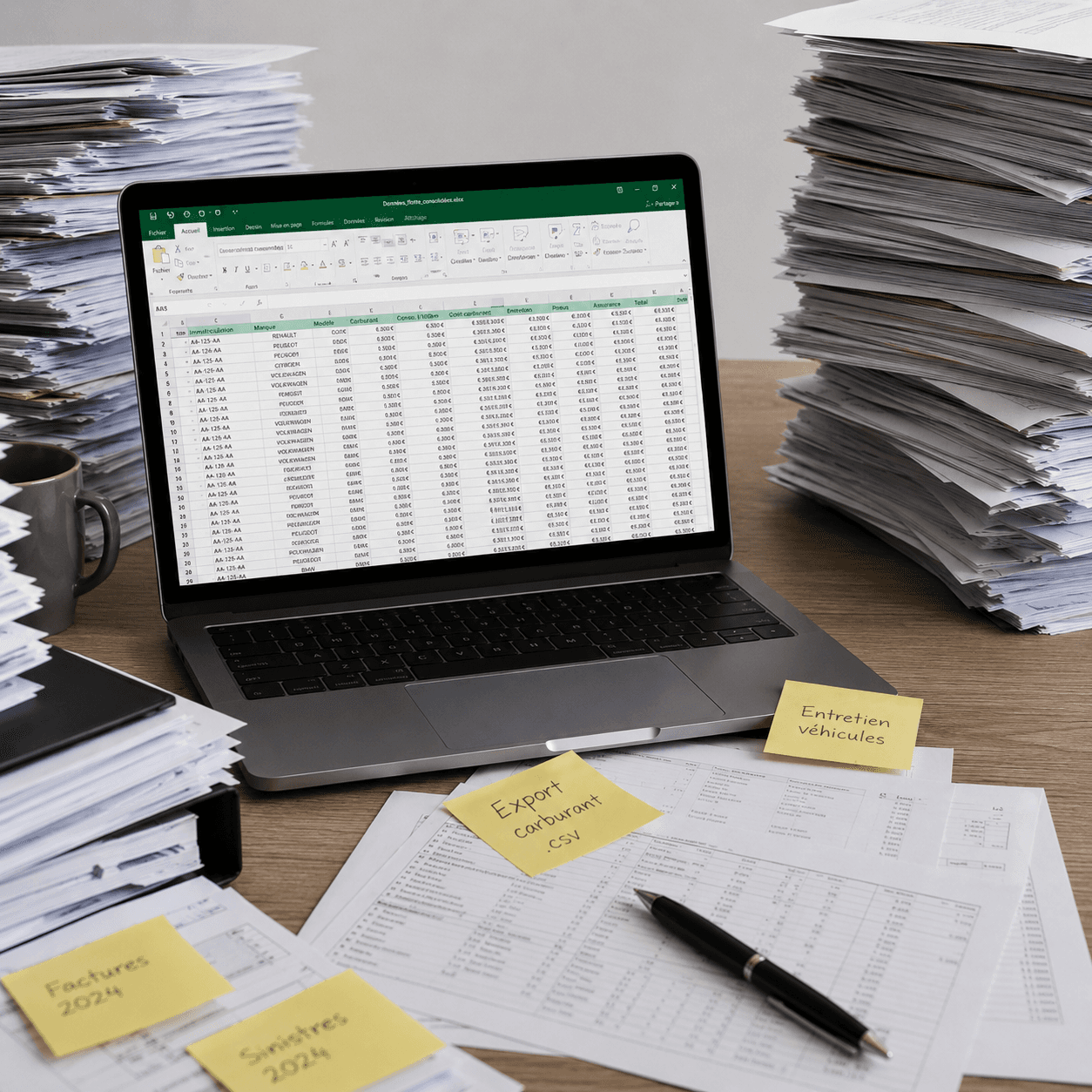
An SME with 100 vehicles generates 8,000 data entries per year, scattered across Excel spreadsheets, paper invoices, rental company exports, and maintenance logs. With Fleeti, everything is centralized and updated in real time by suppliers and field data. Switch over in 30 days, with no downtime.

An SME with 100 vehicles generates 8,000 data entries per year, scattered across Excel spreadsheets, paper invoices, rental company exports, and maintenance logs. With Fleeti, everything is centralized and updated in real time by suppliers and field data. Switch over in 30 days, with no downtime.

In Excel, each function has its own file: vehicles, drivers, claims, fuel, and maintenance. To make a decision, you have to cross-reference everything, which carries a high risk of error.

In Excel, each function has its own file: vehicles, drivers, claims, fuel, and maintenance. To make a decision, you have to cross-reference everything, which carries a high risk of error.

In Excel, each function has its own file: vehicles, drivers, claims, fuel, and maintenance. To make a decision, you have to cross-reference everything, which carries a high risk of error.

With Fleeti, data flows continuously from rental companies, oil companies, telematics providers, and dashcams. A schedule change made in the morning is reflected in payroll by the evening. Any deviation in fuel consumption is visible in real time. An insurance claim can be filed in 2 minutes via the mobile app, with photos and dashcam video attached.

With Fleeti, data flows continuously from rental companies, oil companies, telematics providers, and dashcams. A schedule change made in the morning is reflected in payroll by the evening. Any deviation in fuel consumption is visible in real time. An insurance claim can be filed in 2 minutes via the mobile app, with photos and dashcam video attached.

Comparison of a decentralized Excel system and the centralized Fleeti platform for managing a fleet of 100 vehicles
The Fleeti platform centralizes nine categories of fleet data: vehicles, drivers, contracts, and tax information

Manage your entire fleet in real time from a single platform

Manage your entire fleet in real time from a single platform

Manage your entire fleet in real time from a single platform

Our fleet management software centralizes nine categories of data: vehicles, drivers, contracts, claims, fuel, maintenance, taxes, geolocation, and reporting. Fleeti consolidates them using a unique vehicle identifier that propagates every change throughout the system.

Our fleet management software centralizes nine categories of data: vehicles, drivers, contracts, claims, fuel, maintenance, taxes, geolocation, and reporting. Fleeti consolidates them using a unique vehicle identifier that propagates every change throughout the system.

Vehicles: registration, engine type, actual mileage, maintenance, insurance, compliance. Drivers: licenses, training, eco-driving, assignments, mileage allowances. Finance: long-term lease or purchase contracts, claims, AEN, actual TCO. Field operations: geolocation, fuel consumption, engine condition of each asset.

Vehicles: registration, engine type, actual mileage, maintenance, insurance, compliance. Drivers: licenses, training, eco-driving, assignments, mileage allowances. Finance: long-term lease or purchase contracts, claims, AEN, actual TCO. Field operations: geolocation, fuel consumption, engine condition of each asset.

Any change has a ripple effect. Assigning a driver updates their AEN, claims history, and pay. Abnormal fuel consumption triggers an alert indicating a deviation from WLTP fuel consumption. Long-term lease contract renewals are planned in advance based on actual mileage and observed claims history.

Any change has a ripple effect. Assigning a driver updates their AEN, claims history, and pay. Abnormal fuel consumption triggers an alert indicating a deviation from WLTP fuel consumption. Long-term lease contract renewals are planned in advance based on actual mileage and observed claims history.

Native Connectors: Your Ecosystem Is Already Connected

Native Connectors: Your Ecosystem Is Already Connected

Native Connectors: Your Ecosystem Is Already Connected

A SaaS platform doesn’t replace your tools—it connects to them. Fleeti has over 100 native connectors: leasing companies (Arval, ALD, Athlon, Leasys, Alphabet), oil companies (TotalEnergies, BP, Shell, DKV), ERP systems (SAP, Cegid, Sage, Pennylane), payroll providers (Lucca, Silae, Workday), and OEMs (Renault, Stellantis, Volkswagen, Mercedes). For everything else, OCR reads any PDF invoice.

A SaaS platform doesn’t replace your tools—it connects to them. Fleeti has over 100 native connectors: leasing companies (Arval, ALD, Athlon, Leasys, Alphabet), oil companies (TotalEnergies, BP, Shell, DKV), ERP systems (SAP, Cegid, Sage, Pennylane), payroll providers (Lucca, Silae, Workday), and OEMs (Renault, Stellantis, Volkswagen, Mercedes). For everything else, OCR reads any PDF invoice.

In the field, Fleeti integrates telematics units, smart dashcams, temperature sensors for the cold chain, and IoT sensors for non-motorized assets (trailers, containers). Get started without any installation using the OEM connection, and add units as needed.

In the field, Fleeti integrates telematics units, smart dashcams, temperature sensors for the cold chain, and IoT sensors for non-motorized assets (trailers, containers). Get started without any installation using the OEM connection, and add units as needed.

Fleeti Ecosystem: 100+ native connectors to rental companies, oil companies, ERP systems, payroll providers, and OEMs
Fleeti combines administrative and field data: telematics, dashcams, IoT sensors, and OEM manufacturer connectivity

Combining administration and field operations: the fundamental difference from pure administrative software

Combining administration and field operations: the fundamental difference from pure administrative software

Combining administration and field operations: the fundamental difference from pure administrative software

Most SaaS solutions digitize administrative tasks but overlook on-the-ground operations. Fleeti combines the administrative layer with on-the-ground data: onboard telematics, video dashcams, temperature sensors, or direct OEM connections without a separate device. Mileage is read from the CAN bus, not reported.

Most SaaS solutions digitize administrative tasks but overlook on-the-ground operations. Fleeti combines the administrative layer with on-the-ground data: onboard telematics, video dashcams, temperature sensors, or direct OEM connections without a separate device. Mileage is read from the CAN bus, not reported.

This difference changes everything. Real-time geolocation tracks your vehicles in 5 seconds. Preventive maintenance is triggered based on actual engine mileage, preventing breakdowns and extending the vehicle’s lifespan. Comparing fuel consumption to mileage helps detect fuel theft, misuse, and out-of-context refueling.

This difference changes everything. Real-time geolocation tracks your vehicles in 5 seconds. Preventive maintenance is triggered based on actual engine mileage, preventing breakdowns and extending the vehicle’s lifespan. Comparing fuel consumption to mileage helps detect fuel theft, misuse, and out-of-context refueling.

Accident claims benefit from engine data (speed, braking, location at the time of impact) and dashcam video: this helps defend against the insurer and speeds up reimbursement. Measured eco-driving generates a score for each driver and reduces the claims rate by 15 to 25% within 12 months. For the cold chain, sensors ensure HACCP compliance.

Accident claims benefit from engine data (speed, braking, location at the time of impact) and dashcam video: this helps defend against the insurer and speeds up reimbursement. Measured eco-driving generates a score for each driver and reduces the claims rate by 15 to 25% within 12 months. For the cold chain, sensors ensure HACCP compliance.

Customized Dashboards and AI: Raw Data Becomes a Decision

Customized Dashboards and AI: Raw Data Becomes a Decision

Customized Dashboards and AI: Raw Data Becomes a Decision

A platform is only valuable if it transforms data into decisions. Fleeti provides role-based dashboards (CFO, manager, HR, procurement), scheduled PDF reports, a conversational AI assistant, and an ESG module for CSRD reporting.

A platform is only valuable if it transforms data into decisions. Fleeti provides role-based dashboards (CFO, manager, HR, procurement), scheduled PDF reports, a conversational AI assistant, and an ESG module for CSRD reporting.

The AI assistant responds in seconds: which vehicles exceed their WLTP fuel consumption by 20%, which driver has the worst eco-driving score, what is the actual TCO of the compact hybrid, and which vehicles were underutilized this month. No more manual searching—decisions based on actual data.

The AI assistant responds in seconds: which vehicles exceed their WLTP fuel consumption by 20%, which driver has the worst eco-driving score, what is the actual TCO of the compact hybrid, and which vehicles were underutilized this month. No more manual searching—decisions based on actual data.

The CSRD module automatically calculates Scope 1 (fuel) and Scope 3 (business travel) CO₂ emissions, the VFE share based on the LOM quota, and the trajectory toward 2030. Export the data in the format required by your auditor.

The CSRD module automatically calculates Scope 1 (fuel) and Scope 3 (business travel) CO₂ emissions, the VFE share based on the LOM quota, and the trajectory toward 2030. Export the data in the format required by your auditor.

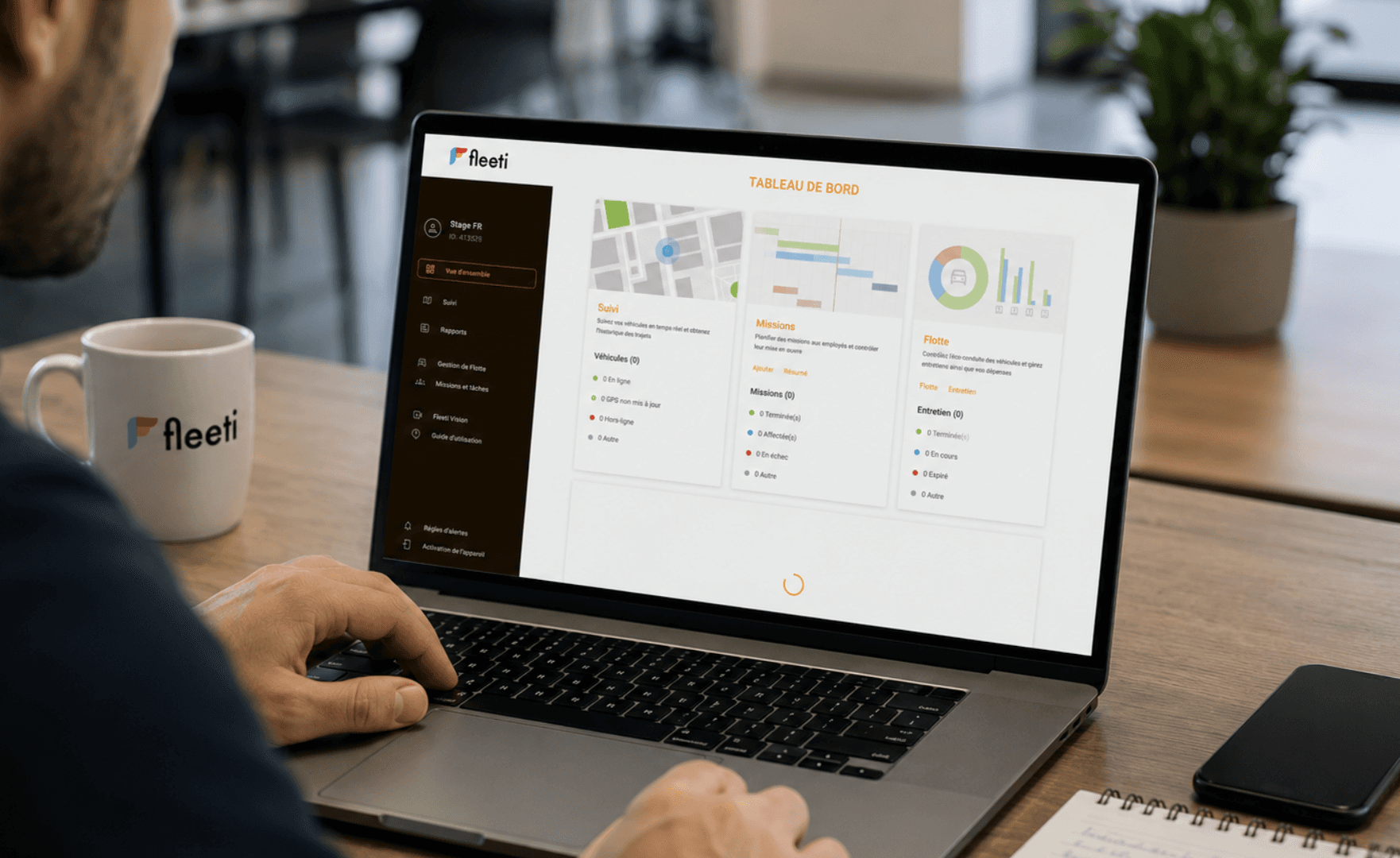
Fleeti Dashboard by Role with a Conversational AI Assistant and an ESG Module for CSRD Reporting
ROI of fleet management digitization with Fleeti: 300 hours saved per year and a payback period of 4 to 8 months

Digitization: A Quick Return on Investment

Digitization: A Quick Return on Investment

Digitization: A Quick Return on Investment

For a company with 100 vehicles, digitization pays for itself in 4 to 8 months. There are three key factors: time saved, hidden costs avoided, and fleet optimization made possible by consolidated data.

For a company with 100 vehicles, digitization pays for itself in 4 to 8 months. There are three key factors: time saved, hidden costs avoided, and fleet optimization made possible by consolidated data.

First factor: time. We save 300 hours per year across 100 vehicles in the areas of geolocation, maintenance, fuel, claims, and reporting. At a full hourly cost of €35, this amounts to more than €10,000 in annual savings.

First factor: time. We save 300 hours per year across 100 vehicles in the areas of geolocation, maintenance, fuel, claims, and reporting. At a full hourly cost of €35, this amounts to more than €10,000 in annual savings.

Second benefit: avoided hidden costs—starting at €5,000 for 100 vehicles. A 20% reduction in accident rates through eco-driving, anticipated long-term lease return costs, breakdowns avoided through preventive maintenance, and fuel consumption aligned with actual usage.

Second benefit: avoided hidden costs—starting at €5,000 for 100 vehicles. A 20% reduction in accident rates through eco-driving, anticipated long-term lease return costs, breakdowns avoided through preventive maintenance, and fuel consumption aligned with actual usage.

Third lever: fleet optimization—actual TCO per vehicle, quantified electrification trade-offs, and renegotiation of long-term leases based on precise data. This lever accounts for 5 to 15% of the annual fleet budget. To learn more, visit the page dedicated to managing your fleet’s TCO.

Third lever: fleet optimization—actual TCO per vehicle, quantified electrification trade-offs, and renegotiation of long-term leases based on precise data. This lever accounts for 5 to 15% of the annual fleet budget. To learn more, visit the page dedicated to managing your fleet’s TCO.

Schedule a demo

Shared Excel or the Fleeti Platform: A Point-by-Point Comparison

The switch from Excel to Fleeti changes six aspects of daily life. Differences observed among small and medium-sized businesses with 50 to 200 vehicles.

Vehicle Tracking

Vehicle Tracking

With Excel: mileage reported by drivers, occasional updates. With Fleeti: real-time mileage via telematics or OEM API, geolocation in 5 seconds.

Data Centralization

With Excel: 5 to 10 files to cross-reference, with versions varying by employee. With Fleeti: a single platform, a shared source of truth, and a unique vehicle ID.

Risk Anticipation

With Excel: missed deadlines and unexpected breakdowns. With Fleeti: automatic alerts for driver’s licenses, vehicle inspections, end of long-term leases, and predictive maintenance.

Field data

With Excel: no visibility. With Fleeti: geolocation, eco-driving, dashcam, cold chain sensors.

Decision-making

With Excel: intuition and manual data extraction. With Fleeti: live dashboard, conversational AI assistant, and CSRD-ready reports.

Reporting and Compliance

With Excel: monthly spreadsheet compilation, AEN recalculated manually. With Fleeti: scheduled PDF reports, automatic AEN, ANTAI designation in two clicks.

Beyond these six dimensions, digitization has a multiplier effect on time. Here is an estimate of the administrative time saved, task by task, for a typical fleet of 100 vehicles.

How many hours does your team save, task by task?

The time-based ROI of digitization is measured line by line. Estimate for 100 vehicles: 300 hours per year, or 8 weeks of work saved.

≈ 50 h

Real-Time Vehicle Tracking

With Excel: Contact the driver to locate the vehicle; perform a monthly cross-check with the rental company's export data. With Fleeti: Geolocation in 5 seconds, engine mileage, alerts for vehicle downtime or when out of range.

≈ 40 h

Maintenance Planning

With Excel: paper logbook, maintenance triggered by self-reported mileage, emergency repairs for unexpected breakdowns. With Fleeti: preventive maintenance based on actual engine mileage, automatic work orders sent to service networks, lifecycle tracking.

≈ 40 h

Fuel and Energy Consolidation

With Excel: monthly fuel export, manual cross-checking, visual detection. With Fleeti: fuel card data feed via API, mileage linked to each fill-up, automatic detection of irregularities and fuel theft.

≈ 50 h

Claims Processing

With Excel: emails with the insurer, claims adjuster, and repair shop; case files scattered across four email accounts; negotiations with no documentation. With Fleeti: mobile workflow, attached dashcam video, engine data, and statistics by driver.

≈ 80 h

Reporting and Dashboards

With Excel: monthly spreadsheet compilation, manual charts, email distribution. With Fleeti: live dashboard by role, scheduled PDF reports, CSRD metrics, AI assistant for questions.

≈ 40 h

Driver Assignments and Management

With Excel: driver spreadsheet, manual updates, cross-referencing with payroll, one-time reports via email. With Fleeti: assignment in two clicks, automatic synchronization with AEN and payroll, history retained.

The Digital Transformation of Your Fleet, by the Numbers

The Digital Transformation of Your Fleet, by the Numbers

The Digital Transformation of Your Fleet, by the Numbers

300 h

300 h

300 h

Hours saved by your fleet manager across a fleet of 100 vehicles: administrative and operational.

Hours saved by your fleet manager across a fleet of 100 vehicles: administrative and operational.

9

9

9

Centralized data categories: vehicles, drivers, contracts, claims, fuel, maintenance, taxation, geolocation, reporting.

Centralized data categories: vehicles, drivers, contracts, claims, fuel, maintenance, taxation, geolocation, reporting.

Centralized data categories: vehicles, drivers, contracts, claims, fuel, maintenance, taxation, geolocation, reporting.

0

0

0

Shared Excel file for managing your fleet. The data is stored on the platform, not on your predecessor's drive.

Shared Excel file for managing your fleet. The data is stored on the platform, not on your predecessor's drive.

Shared Excel file for managing your fleet. The data is stored on the platform, not on your predecessor's drive.

100+

Connectors and native integrations: rental companies, oil companies, ERP systems, payroll, OEM manufacturers, dashcams, telematics, IoT.

How far along are you in your digital transformation?

Digital transformation doesn't happen overnight. Four profiles stand out among small and medium-sized businesses. Identify which one applies to you to understand the leap you need to make.

Level 1: Everything About Excel

1 to 5 spreadsheets shared on a drive, manual updates, deadlines written on Post-it notes. Symptoms: missed vehicle inspections, AEN recalculated by hand, insurance claims scattered across 4 email accounts, no reliable reporting.

1 to 5 spreadsheets shared on a drive, manual updates, deadlines written on Post-it notes. Symptoms: missed vehicle inspections, AEN recalculated by hand, insurance claims scattered across 4 email accounts, no reliable reporting.

1 to 5 spreadsheets shared on a drive, manual updates, deadlines written on Post-it notes. Symptoms: missed vehicle inspections, AEN recalculated by hand, insurance claims scattered across 4 email accounts, no reliable reporting.

Level 2: Scattered Tools

One tool per topic: claims, contracts, geolocation, and Excel for everything else. The data systems aren’t integrated, so every update must be entered in three different places. Symptoms: duplicate entries, outdated data, and no 360° view.

One tool per topic: claims, contracts, geolocation, and Excel for everything else. The data systems aren’t integrated, so every update must be entered in three different places. Symptoms: duplicate entries, outdated data, and no 360° view.

One tool per topic: claims, contracts, geolocation, and Excel for everything else. The data systems aren’t integrated, so every update must be entered in three different places. Symptoms: duplicate entries, outdated data, and no 360° view.

Level 3: Partial platform

A system focused purely on administrative tasks (invoices, contracts, taxes) or one focused purely on telematics (geolocation, driving) that handles its own area well but not the other. Administration and field operations remain in two completely separate silos. Symptoms: incomplete decisions, incomplete reports.

A system focused purely on administrative tasks (invoices, contracts, taxes) or one focused purely on telematics (geolocation, driving) that handles its own area well but not the other. Administration and field operations remain in two completely separate silos. Symptoms: incomplete decisions, incomplete reports.

A system focused purely on administrative tasks (invoices, contracts, taxes) or one focused purely on telematics (geolocation, driving) that handles its own area well but not the other. Administration and field operations remain in two completely separate silos. Symptoms: incomplete decisions, incomplete reports.

Level 4: Fleeti Unified Platform

A unique SaaS platform that brings together administrative and field operations. Vehicles, drivers, contracts, claims, tax matters, fuel, maintenance, geolocation, and reporting—all continuously updated by suppliers, telematics providers, and OEMs. Data-driven decisions, built-in compliance, and ROI in 4 to 8 months.

Frequently Asked Questions About the Digital Transformation of Fleet Management

Why Should You Digitize Your Fleet Management?
Digitizing fleet management transforms a manual process scattered across Excel spreadsheets into a centralized process on a single platform. It offers three measurable benefits: savings in administrative and operational time (approximately 300 hours per year for a fleet of 100 vehicles), data reliability (a single shared source vs. conflicting versions), and automatic regulatory compliance (GDPR, AEN, ANTAI, annual taxes, CSRD). For an SME or mid-sized company managing more than 50 vehicles, the return on investment is achieved in 4 to 8 months.
How can you replace Excel for managing your vehicle fleet?
Replacing Excel with a fleet management platform involves four steps. First, scoping: taking inventory of existing files, identifying stakeholders, and auditing critical data. Next, integration: setting up rental accounts and fuel cards via API, configuring the ANTAI gateway, and establishing the ERP/payroll connection. Then comes the import phase: transferring vehicle history, active contracts, and open claims. Finally, training: familiarizing target users with the application and configuring role-based permissions. The full transition takes 30 to 90 days, depending on the size of the fleet.
How long does it take to implement fleet management software?
Implementing a SaaS fleet management platform takes 7 to 90 days, depending on the size of the fleet and the desired level of integration. For an SME with 50 to 100 vehicles, the first consolidated overview is available within 7 days after the account is opened and the main suppliers (rental company, fuel provider, insurer) are connected. Full deployment (user training, ERP/payroll integration, and historical data import) is completed in 30 to 60 days. For a mid-sized company with 200 to 500 vehicles and multiple subsidiaries, the project takes 60 to 90 days.
What is the return on investment for a fleet management platform?
The return on investment is driven by three factors. The first factor is the hours saved (both administrative and operational): approximately 300 hours per year for 100 vehicles, or €10,500 at an hourly cost of €35. Second factor: avoided hidden costs: a 20% reduction in accident rates thanks to eco-driving, anticipated long-term lease return fees, breakdowns avoided through preventive maintenance, and detected fuel consumption variances. Third benefit: fleet optimization through consolidated data, accounting for 5 to 15% of the annual fleet budget. The full ROI is realized in 4 to 8 months for an SME.
How does AI help manage a fleet of vehicles?
A modern fleet management platform includes a conversational AI assistant that answers your questions in natural language. You can ask which vehicles exceed their WLTP fuel consumption by more than 20%, which driver has the lowest eco-driving score, what the actual TCO of your compact hybrid will be in 2025, and which vehicles were underutilized this month. The AI draws on centralized data (administrative, field, invoices, telematics) and offers data-driven recommendations. You save time searching for information, and your decisions are based on measurable figures.
Is a fleet management platform suitable for an SME with 50 vehicles?
A fleet management platform becomes worthwhile once a company has 20 to 30 vehicles, and is essential once the fleet reaches 50 vehicles. At that size, the administrative time spent on fleet management exceeds half a day per week for the manager, and the losses resulting from oversights (missed deadlines, late ANTAI designations, unexpected return fees) more than offset the cost of the platform. Fleeti offers modules that can be activated gradually, allowing you to start with priority areas (such as vehicles, drivers, and AENs) and then add the rest as you go.
Is my fleet data secure in SaaS software?
The data processed in Fleeti is hosted exclusively in Europe, in data centers certified to the ISO 27001 standard for information security. Data flows between the devices, manufacturer APIs, and the platform are encrypted using TLS 1.3. Backups are performed daily, and authentication supports SSO via SAML 2.0 or OAuth 2.0 to integrate with your corporate directory. GDPR compliance is ensured by default: processing register, separation of personal and professional data for geolocation, configurable retention periods, and built-in right to erasure. An external security audit is conducted annually, and the DPA is provided upon signing the contract.
Do I need to install a device in every vehicle to digitize my fleet?
Installing a telematics unit is not required to digitize your fleet management. Fleeti supports three connection modes. The OEM manufacturer mode (without a unit), which uses the manufacturers’ native APIs (Renault, Stellantis, Volkswagen, Mercedes) to retrieve mileage and engine data without installation. The Fleeti telematics device mode, which provides more comprehensive engine data (fuel consumption, fault codes, acceleration) and is suitable for older vehicles or machinery. The standalone IoT sensor mode for non-motorized assets (trailers, containers, equipment). The choice depends on the composition of the fleet and the priority use cases.
Which providers does Fleeti natively integrate with?
Fleeti has native integrations with the major players in the French market. For leasing companies: Arval, ALD Automotive (Ayvens), Athlon, Leasys, and Alphabet. For oil companies: TotalEnergies, BP, Shell, and the DKV hub for multi-brand fuel cards. For government agencies: ANTAI for traffic violation notifications and SIV for downloading vehicle registration certificates. For ERP, accounting, and payroll systems: SAP, Cegid, Sage, Pennylane, Lucca, Silae, and Workday. For maintenance networks: Norauto, Speedy, and First Stop. For suppliers without native integration, OCR reads PDF invoices in less than a second and allocates costs to the correct vehicle based on the license plate number.
Will my drivers accept a new tool?
Drivers’ acceptance of a fleet management platform is based on three principles. The first is simplicity: the mobile app must be easy to learn in less than 5 minutes, without extensive training. The second is direct benefit: the driver must see how it benefits them (license renewal notifications, simplified submission of accident reports, access to their own work-related trips). The third is privacy: the privacy button available in the cab or within the app ensures that personal trips are not tracked, in accordance with current CNIL regulations. Across 200 vehicles, Fleeti’s adoption rate averages over 90% after 60 days, provided that internal communication has been prepared in advance.
Updated: September 2026

Step away from Excel, keep what works, and add what’s missing. Fleeti brings together administrative and field staff on a single platform. You can start digitizing your fleet management in just 7 days.

Step away from Excel, keep what works, and add what’s missing. Fleeti brings together administrative and field staff on a single platform. You can start digitizing your fleet management in just 7 days.

Schedule a demo