
Conformité réglementaire pour flotte : LOM, CSRD, ANTAI, AEN
Conformité réglementaire pour flotte : LOM, CSRD, ANTAI, AEN
Conformité réglementaire pour flotte : LOM, CSRD, ANTAI, AEN
Meet all the requirements for your vehicle fleet on a single platform: the LOM Act, CSRD, ANTAI designation, benefits in kind, and the annual incentive tax. Viewable schedule, early warning of penalties, and audit-ready data.
Meet all the requirements for your vehicle fleet on a single platform: the LOM Act, CSRD, ANTAI designation, benefits in kind, and the annual incentive tax. Viewable schedule, early warning of penalties, and audit-ready data.
Schedule a demo

Conformité réglementaire pour flotte : LOM, CSRD, ANTAI, AEN
Meet all the requirements for your vehicle fleet on a single platform: the LOM Act, CSRD, ANTAI designation, benefits in kind, and the annual incentive tax. Viewable schedule, early warning of penalties, and audit-ready data.
Schedule a demo
Why Fleet Compliance Became a Strategic Issue in 2026
Why Fleet Compliance Became a Strategic Issue in 2026
The legal obligations for a vehicle fleet currently span five key areas: the LOM Act, CSRD, ANTAI, benefits in kind, and the annual incentive tax (TAI). For a fleet of 200 internal-combustion vehicles, the combined cost of non-compliance penalties and suboptimal tax planning can exceed €100,000 per year.
The legal obligations for a vehicle fleet currently span five key areas: the LOM Act, CSRD, ANTAI, benefits in kind, and the annual incentive tax (TAI). For a fleet of 200 internal-combustion vehicles, the combined cost of non-compliance penalties and suboptimal tax planning can exceed €100,000 per year.
The legal obligations for a vehicle fleet currently span five key areas: the LOM Act, CSRD, ANTAI, benefits in kind, and the annual incentive tax (TAI). For a fleet of 200 internal-combustion vehicles, the combined cost of non-compliance penalties and suboptimal tax planning can exceed €100,000 per year.
Regulatory pressure has intensified since 2025: the TAI will double its fee in 2026 (€4,000 per missing vehicle), the decree of February 25, 2025 raised the AEN flat rate for internal combustion engines from 9% to 15%, and the Omnibus Act of February 26, 2026 raised the CSRD thresholds without relaxing data quality requirements.
Regulatory pressure has intensified since 2025: the TAI will double its fee in 2026 (€4,000 per missing vehicle), the decree of February 25, 2025 raised the AEN flat rate for internal combustion engines from 9% to 15%, and the Omnibus Act of February 26, 2026 raised the CSRD thresholds without relaxing data quality requirements.
Regulatory pressure has intensified since 2025: the TAI will double its fee in 2026 (€4,000 per missing vehicle), the decree of February 25, 2025 raised the AEN flat rate for internal combustion engines from 9% to 15%, and the Omnibus Act of February 26, 2026 raised the CSRD thresholds without relaxing data quality requirements.
The challenge for a CFO, a CSR department, or a legal team is no longer to understand each document in isolation, but to manage multiple deadlines—which do not overlap—simultaneously, all based on the same data foundation. Fleeti consolidates this data and delivers it to the right places, in the right formats, at the right time.
The challenge for a CFO, a CSR department, or a legal team is no longer to understand each document in isolation, but to manage multiple deadlines—which do not overlap—simultaneously, all based on the same data foundation. Fleeti consolidates this data and delivers it to the right places, in the right formats, at the right time.


LOM Act: Drive the Transition to Green Practices and Plan for the Annual Incentive Tax
LOM Act: Drive the Transition to Green Practices and Plan for the Annual Incentive Tax
The LOM Act requires fleets with more than 100 vehicles to meet an increasing quota of low-emission vehicles (VFE). The annual incentive tax, which took effect on March 1, 2025, penalizes non-compliance with the quota: €4,000 per missing vehicle in 2026, €5,000 starting in 2027, capped at 1% of revenue in France.
The LOM Act requires fleets with more than 100 vehicles to meet an increasing quota of low-emission vehicles (VFE). The annual incentive tax, which took effect on March 1, 2025, penalizes non-compliance with the quota: €4,000 per missing vehicle in 2026, €5,000 starting in 2027, capped at 1% of revenue in France.
The quota for zero-emission vehicles (ZEVs) in the fleet will increase from 15% in 2025 to 18% in 2026 and 25% in 2027. The Climate and Resilience Act extends this trajectory to 70% ZEVs in fleet renewals by 2030. An VFE is a vehicle emitting less than 50 g CO2/km under the WLTP cycle: 100% electric, hydrogen, or eligible plug-in hybrid.
The quota for zero-emission vehicles (ZEVs) in the fleet will increase from 15% in 2025 to 18% in 2026 and 25% in 2027. The Climate and Resilience Act extends this trajectory to 70% ZEVs in fleet renewals by 2030. An VFE is a vehicle emitting less than 50 g CO2/km under the WLTP cycle: 100% electric, hydrogen, or eligible plug-in hybrid.
Trois leviers Fleeti : suivi en temps réel du mix énergétique et de l'écart au quota, audit d'éligibilité véhicule par véhicule à partir des kilomètres réels, projection chiffrée de la TAI à 12 et 24 mois pour cadrer l'arbitrage financier. La déclaration TAI s'effectue au 1er mars sur l'année précédente, vos données 2025 doivent être prêtes au 1er mars 2026.
Trois leviers Fleeti : suivi en temps réel du mix énergétique et de l'écart au quota, audit d'éligibilité véhicule par véhicule à partir des kilomètres réels, projection chiffrée de la TAI à 12 et 24 mois pour cadrer l'arbitrage financier. La déclaration TAI s'effectue au 1er mars sur l'année précédente, vos données 2025 doivent être prêtes au 1er mars 2026.
CSRD: Produce the fleet reports your auditors expect
CSRD: Produce the fleet reports your auditors expect
The CSRD requires large companies to provide auditable non-financial reporting, including Scope 1 emissions from their vehicle fleets (direct fuel combustion). Since the Omnibus Act of February 26, 2026, the threshold has been raised to more than 1,000 employees and €450 million in net revenue, but data quality remains a requirement under the ESRS E1 standard published by EFRAG.
The CSRD requires large companies to provide auditable non-financial reporting, including Scope 1 emissions from their vehicle fleets (direct fuel combustion). Since the Omnibus Act of February 26, 2026, the threshold has been raised to more than 1,000 employees and €450 million in net revenue, but data quality remains a requirement under the ESRS E1 standard published by EFRAG.
The method recognized by auditors combines three elements per vehicle: certified annual mileage, certified or measured fuel consumption, and fuel emission factor (2.65 kg CO2/L diesel, 2.28 kg CO2/L gasoline, based on ADEME carbon data). Compatible with Bilan Carbone® and regulatory BEGES requirements for entities required to publish this information. Your auditors expect mileage data that is time-stamped, traceable, and recorded over multiple fiscal years: industry-wide estimates are no longer acceptable.
The method recognized by auditors combines three elements per vehicle: certified annual mileage, certified or measured fuel consumption, and fuel emission factor (2.65 kg CO2/L diesel, 2.28 kg CO2/L gasoline, based on ADEME carbon data). Compatible with Bilan Carbone® and regulatory BEGES requirements for entities required to publish this information. Your auditors expect mileage data that is time-stamped, traceable, and recorded over multiple fiscal years: industry-wide estimates are no longer acceptable.
Pour les entreprises sorties du périmètre post-Omnibus, la norme VSME recommandée par la Commission européenne (30 juillet 2025) reste utile, notamment quand un donneur d'ordre soumis à la CSRD demande vos données fournisseur.
Pour les entreprises sorties du périmètre post-Omnibus, la norme VSME recommandée par la Commission européenne (30 juillet 2025) reste utile, notamment quand un donneur d'ordre soumis à la CSRD demande vos données fournisseur.

ANTAI: Eliminate surcharges and ensure driver designation
ANTAI: Eliminate surcharges and ensure driver designation
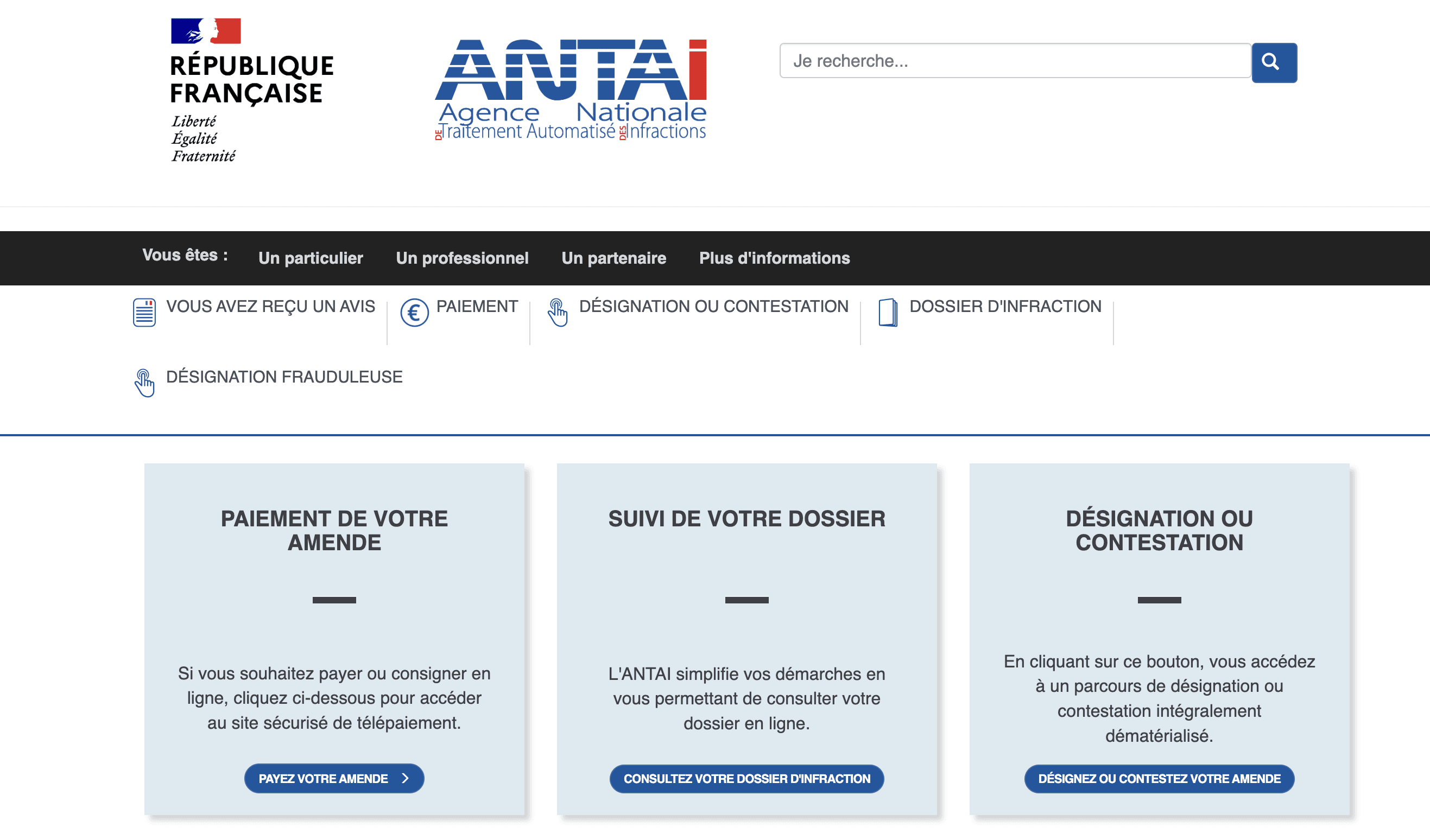
Article L121-6 of the Highway Code requires the legal representative of a company to identify the at-fault driver within 45 days. Failure to do so results in a fixed penalty of €3,750 for the corporate entity and €750 for the legal representative as an individual.
Article L121-6 of the Highway Code requires the legal representative of a company to identify the at-fault driver within 45 days. Failure to do so results in a fixed penalty of €3,750 for the corporate entity and €750 for the legal representative as an individual.
Manually processing a citation takes 10 to 15 minutes (receiving the mail, identifying the driver, looking up the license, filling out the online form). For 200 vehicles with 3 citations per vehicle per year, that amounts to 100 to 150 hours of work annually.
Manually processing a citation takes 10 to 15 minutes (receiving the mail, identifying the driver, looking up the license, filling out the online form). For 200 vehicles with 3 citations per vehicle per year, that amounts to 100 to 150 hours of work annually.
Fleeti se connecte directement à votre espace ANTAI (compte employeur, ou convention API au-delà de 1 000 véhicules) et croise avec le SIV (Système d'Immatriculation des Véhicules) pour valider l'immatriculation avant désignation. Le conducteur est identifié par la télématique embarquée (badge RFID, clé Dallas, identification par usage), la désignation part en un clic. Alertes 7 jours avant l'échéance, preuve d'envoi horodatée, archivage RGPD-compliant.
Fleeti se connecte directement à votre espace ANTAI (compte employeur, ou convention API au-delà de 1 000 véhicules) et croise avec le SIV (Système d'Immatriculation des Véhicules) pour valider l'immatriculation avant désignation. Le conducteur est identifié par la télématique embarquée (badge RFID, clé Dallas, identification par usage), la désignation part en un clic. Alertes 7 jours avant l'échéance, preuve d'envoi horodatée, archivage RGPD-compliant.
Benefits in Kind and Annual Taxes: Fleet Taxation for 2026—No Mistakes
Benefits in Kind and Annual Taxes: Fleet Taxation for 2026—No Mistakes
L'arrêté du 25 février 2025 a profondément modifié l'évaluation forfaitaire de l'avantage en nature véhicule. Pour un thermique récent acheté, le forfait passe de 9 % à 15 % du prix d'achat (20 % avec carburant), calculé sur prix catalogue neuf ou cote Autovista pour les occasions. Les 100 % électriques éligibles à l'éco-score ADEME conservent un abattement de 70 % plafonné à 4 641,60 € en 2026.
L'arrêté du 25 février 2025 a profondément modifié l'évaluation forfaitaire de l'avantage en nature véhicule. Pour un thermique récent acheté, le forfait passe de 9 % à 15 % du prix d'achat (20 % avec carburant), calculé sur prix catalogue neuf ou cote Autovista pour les occasions. Les 100 % électriques éligibles à l'éco-score ADEME conservent un abattement de 70 % plafonné à 4 641,60 € en 2026.
For each vehicle, you must choose between a flat rate and actual mileage. Actual mileage is more advantageous when private use is minimal, but it requires careful tracking of business and personal mileage. Without reliable data, the flat rate applies by default, often at a higher social cost.
For each vehicle, you must choose between a flat rate and actual mileage. Actual mileage is more advantageous when private use is minimal, but it requires careful tracking of business and personal mileage. Without reliable data, the flat rate applies by default, often at a higher social cost.
Fleeti calcule l'AEN au forfait et au réel à partir du kilométrage télématique pro/perso, propose la méthode la plus avantageuse véhicule par véhicule, et exporte les écritures vers la paie ou la DSN. Sur les taxes annuelles d'affectation (ex-TVS), Fleeti applique le barème WLTP publié par la DGFiP au BOFiP et calcule au prorata des jours de détention.
Fleeti calcule l'AEN au forfait et au réel à partir du kilométrage télématique pro/perso, propose la méthode la plus avantageuse véhicule par véhicule, et exporte les écritures vers la paie ou la DSN. Sur les taxes annuelles d'affectation (ex-TVS), Fleeti applique le barème WLTP publié par la DGFiP au BOFiP et calcule au prorata des jours de détention.

Schedule a demo
Coverage Table: What the Law Requires, What Fleeti Automates
Five legal requirements, one data source. The table below summarizes the eligibility thresholds, deadlines, and penalties for noncompliance for each requirement, as well as the Fleeti feature that supports it.
LOM Act
LOM
Fleets of more than 100 vehicles. 18% EV quota by 2026. Fine of €4,000 per vehicle not meeting the quota. Fleeti monitors the energy mix in real time.
TAI
Annual Incentive Tax for fleets with more than 100 vehicles. Filing due by March 1, 2026, for the 2025 tax year. €4,000 per missing vehicle. Fleeti projects the Annual Incentive Tax (AI Tax) over 12- and 24-month periods.
CSRD
More than 1,000 employees AND €450 million in revenue (post-Omnibus). Report for fiscal year 2025. Penalty of €75,000 + 5 years for serious violations. Fleeti delivers auditable Scope 1 data.
ANTAI
Any company with company vehicles. 45 days to designate a representative. Fine of €3,750 for the corporation. Fleeti designates a representative with one click from the platform.
AEN
Benefits in kind for all employees provided with a company vehicle. Applied to each pay period. Risk of a URSSAF adjustment covering a 3-year period. Fleeti calculates both flat-rate and actual amounts.
All of these requirements share the same source data: mileage, engine type, dates of use, and driver assignment. Fleeti automatically collects this data (via onboard telematics or an OEM connection without a dedicated device) and pushes it to the right places in the right formats.
Regulatory Timeline for the Fleet: What to Expect Between Now and 2030
The trajectory is clear through 2030. Penalties are increasing, thresholds are decreasing, and electric vehicle incentives are gradually being phased out. Use this timeline to plan ahead and manage your fleet without any surprises.
2025
Effective Date
February 1: New AEN decree (15% for thermal vehicles, 70% reduction for electric vehicles). March 1: TAI set at €2,000 per missing vehicle. LOM quota: 15%. CSRD Phase 1: First report published.
2026
A Year of Tightening
January 1: CO2 penalty at 108 g/km, weight penalty at 1,500 kg. March 1: TAI declaration for 2025, fee of €4,000. LOM quota: 18%. February 26: The Omnibus Act raises the CSRD thresholds to 1,000 employees and €450 million in revenue.
2027
Acceleration
TAI: €5,000 per missing vehicle. LOM quota: 25% VFE. Favorable electric AEN regime extended through December 31. Deduction limits recalculated.
2028
CSRD Expansion
CSRD Wave 2: First reports published for fiscal year 2027 (originally scheduled for 2026, postponed by the Omnibus Act). The CS3D duty of care is being phased in.
2030
Ultimate Goal
LOM quota: 70% VFE in vehicle replacements (Climate and Resilience Act). A phased-out of electric vehicle tax incentives is expected.
Fleet Compliance at Fleeti: By the Numbers
Fleet Compliance at Fleeti: By the Numbers
Fleet Compliance at Fleeti: By the Numbers

5
5
5
Number of regulations supported by Fleeti: LOM, CSRD, ANTAI, AEN, and TAI are all covered on a single platform
Number of regulations supported by Fleeti: LOM, CSRD, ANTAI, AEN, and TAI are all covered on a single platform
0
0
0
No surcharges thanks to the 45-day expiration alerts for the ANTAI designation
No surcharges thanks to the 45-day expiration alerts for the ANTAI designation
No surcharges thanks to the 45-day expiration alerts for the ANTAI designation
+150 h
+150 h
+150 h
Annual savings in administrative work per 100 vehicles
Annual savings in administrative work per 100 vehicles
Annual savings in administrative work per 100 vehicles
A platform tailored to each of the relevant decision-makers
Fleet compliance is not the responsibility of a single department. Fleeti provides each user role with the views and exports they need, all based on the same data source.
Finance and Management Control
For a finance department managing 100 to 500 vehicles, Fleeti automates 12- and 24-month TAI projections, the calculation of flat-rate or actual AEN per vehicle, and the export of accounting data to payroll or the DSN. Decisions regarding electrification are based on hard data, not intuition. Estimated savings: 50 to 80 hours of work per year for 100 vehicles.
For a finance department managing 100 to 500 vehicles, Fleeti automates 12- and 24-month TAI projections, the calculation of flat-rate or actual AEN per vehicle, and the export of accounting data to payroll or the DSN. Decisions regarding electrification are based on hard data, not intuition. Estimated savings: 50 to 80 hours of work per year for 100 vehicles.
For a finance department managing 100 to 500 vehicles, Fleeti automates 12- and 24-month TAI projections, the calculation of flat-rate or actual AEN per vehicle, and the export of accounting data to payroll or the DSN. Decisions regarding electrification are based on hard data, not intuition. Estimated savings: 50 to 80 hours of work per year for 100 vehicles.
CSR and ESG Department
For CSR departments subject to CSRD or voluntarily participating in VSME, Fleeti continuously calculates Scope 1 emissions by vehicle, site, and entity. You can develop a decarbonization roadmap aligned with SBTi (near-term: 5–10 years; net-zero by 2050) and the ADEME Bilan Carbone® methodology, with annual milestones and alerts in case of deviations. Metrics are exported to your ESG platform (Greenly, Sami, Tennaxia, Toovalu) via API and are auditable with timestamps.
For CSR departments subject to CSRD or voluntarily participating in VSME, Fleeti continuously calculates Scope 1 emissions by vehicle, site, and entity. You can develop a decarbonization roadmap aligned with SBTi (near-term: 5–10 years; net-zero by 2050) and the ADEME Bilan Carbone® methodology, with annual milestones and alerts in case of deviations. Metrics are exported to your ESG platform (Greenly, Sami, Tennaxia, Toovalu) via API and are auditable with timestamps.
For CSR departments subject to CSRD or voluntarily participating in VSME, Fleeti continuously calculates Scope 1 emissions by vehicle, site, and entity. You can develop a decarbonization roadmap aligned with SBTi (near-term: 5–10 years; net-zero by 2050) and the ADEME Bilan Carbone® methodology, with annual milestones and alerts in case of deviations. Metrics are exported to your ESG platform (Greenly, Sami, Tennaxia, Toovalu) via API and are auditable with timestamps.
Legal and Human Resources Department
Pour les équipes juridiques, RH et Office Manager, Fleeti fournit la preuve d'envoi horodatée de chaque désignation ANTAI, archive les permis de conduire avec contrôle de validité, conserve les chartes conducteur signées, et garantit la conformité RGPD (hébergement France, chiffrement AES-256).
Pour les équipes juridiques, RH et Office Manager, Fleeti fournit la preuve d'envoi horodatée de chaque désignation ANTAI, archive les permis de conduire avec contrôle de validité, conserve les chartes conducteur signées, et garantit la conformité RGPD (hébergement France, chiffrement AES-256).
Pour les équipes juridiques, RH et Office Manager, Fleeti fournit la preuve d'envoi horodatée de chaque désignation ANTAI, archive les permis de conduire avec contrôle de validité, conserve les chartes conducteur signées, et garantit la conformité RGPD (hébergement France, chiffrement AES-256).
Geolocation and Driver Data: Built-in GDPR and CNIL Compliance
Geolocation and Driver Data: Built-in GDPR and CNIL Compliance
The geolocation of company vehicles involves the processing of personal data, which is governed by the GDPR and the CNIL. Fleeti provides an end-to-end solution: legitimate purpose, controlled retention period, and drivers’ rights protected.
The geolocation of company vehicles involves the processing of personal data, which is governed by the GDPR and the CNIL. Fleeti provides an end-to-end solution: legitimate purpose, controlled retention period, and drivers’ rights protected.
The geolocation of company vehicles is subject to the GDPR and CNIL Decision No. 2015-165 of June 4, 2015. The employer must demonstrate an explicit purpose, inform each driver, limit the retention of location data to two months as a general rule, and ensure that the system is deactivated outside of working hours. A CNIL fine can amount to up to 4% of global revenue.
The geolocation of company vehicles is subject to the GDPR and CNIL Decision No. 2015-165 of June 4, 2015. The employer must demonstrate an explicit purpose, inform each driver, limit the retention of location data to two months as a general rule, and ensure that the system is deactivated outside of working hours. A CNIL fine can amount to up to 4% of global revenue.
Fleeti héberge les données conducteurs en France chez OVHcloud, applique un chiffrement AES-256 en transit et au repos, segmente les accès par rôle (DAF, RSE, juridique, RH, atelier) et journalise la traçabilité des consultations.
Fleeti héberge les données conducteurs en France chez OVHcloud, applique un chiffrement AES-256 en transit et au repos, segmente les accès par rôle (DAF, RSE, juridique, RH, atelier) et journalise la traçabilité des consultations.
On a daily basis, Fleeti generates a pre-filled log of fleet operations, provides a driver policy template that can be signed online, offers a private mode that can be activated outside of working hours, and allows for the complete export of a driver’s data in accordance with Article 20 of the GDPR.
On a daily basis, Fleeti generates a pre-filled log of fleet operations, provides a driver policy template that can be signed online, offers a private mode that can be activated outside of working hours, and allows for the complete export of a driver’s data in accordance with Article 20 of the GDPR.
Frequently Asked Questions About Fleet Regulatory Compliance
Take back control of your fleet’s regulatory compliance. Fleeti consolidates the LOM Act, CSRD, ANTAI designation, benefits in kind, and the annual incentive tax into a single platform. Viewable timeline, anticipated penalties, and audit-ready data.
Take back control of your fleet’s regulatory compliance. Fleeti consolidates the LOM Act, CSRD, ANTAI designation, benefits in kind, and the annual incentive tax into a single platform. Viewable timeline, anticipated penalties, and audit-ready data.



The IoT Supporting Business Operations in Africa and Europe.
© 2026 Fleeti SAS