
Kaajal Gungadeen
Content & Editorial Specialist
February 6, 2026
Fleet digitization: key steps for success
The digitization of fleets has become a strategic lever for companies whose business relies on field operations.
Faced with rising costs, increasing safety requirements, and the need for real-time visibility, fleet managers must now rely on reliable digital tools to effectively manage their vehicle fleets.
But successfully digitizing a fleet is not just a matter of installing a GPS device. It is a structured, gradual, and usage-oriented process. At Fleeti, we support companies in France and Africa in this transformation, working closely with them on the ground.
Why fleet digitization has become essential
Traditional fleet management, based on manual reports or partial data, quickly reaches its limits. Without reliable data, it becomes difficult to control costs, anticipate incidents, or ensure driver safety.
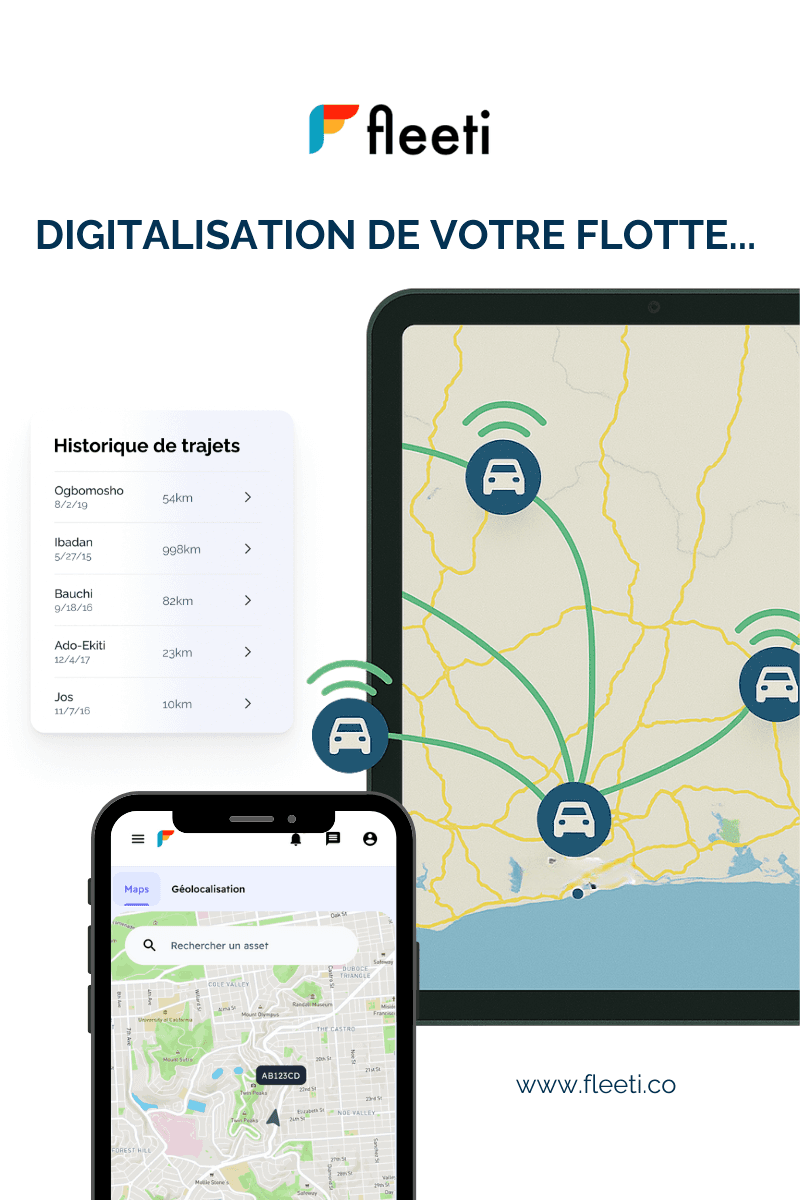
Digitizing the fleet provides access to real-time vehicle data from a GPS tracking system and transforms this information into operational performance levers. It offers an objective view of field activity and facilitates day-to-day decision-making.
Step 1: Define clear fleet management objectives
The first step in a digitization project is to clarify the objectives. Each fleet has its own challenges. Some seek to reduce fuel costs, others to improve driver safety or enhance visibility across multi-site operations.
Identifying these priorities makes it possible to choose a fleet management solution that is truly tailored to your needs. Digitalization is only valuable if it addresses the specific issues faced by fleet managers and field teams.
Step 2: Rely on a reliable GPS tracking system
GPS tracking of vehicles is the foundation of any digitized fleet. It allows you to locate vehicles in real time, analyze routes, understand usage patterns, and anticipate unforeseen events.
Companies have a vehicle tracking system designed to operate in complex operational environments, both in France and Africa. Data reliability is essential for building trust and enabling accurate fleet management.
Step 3: Centralize and utilize vehicle data
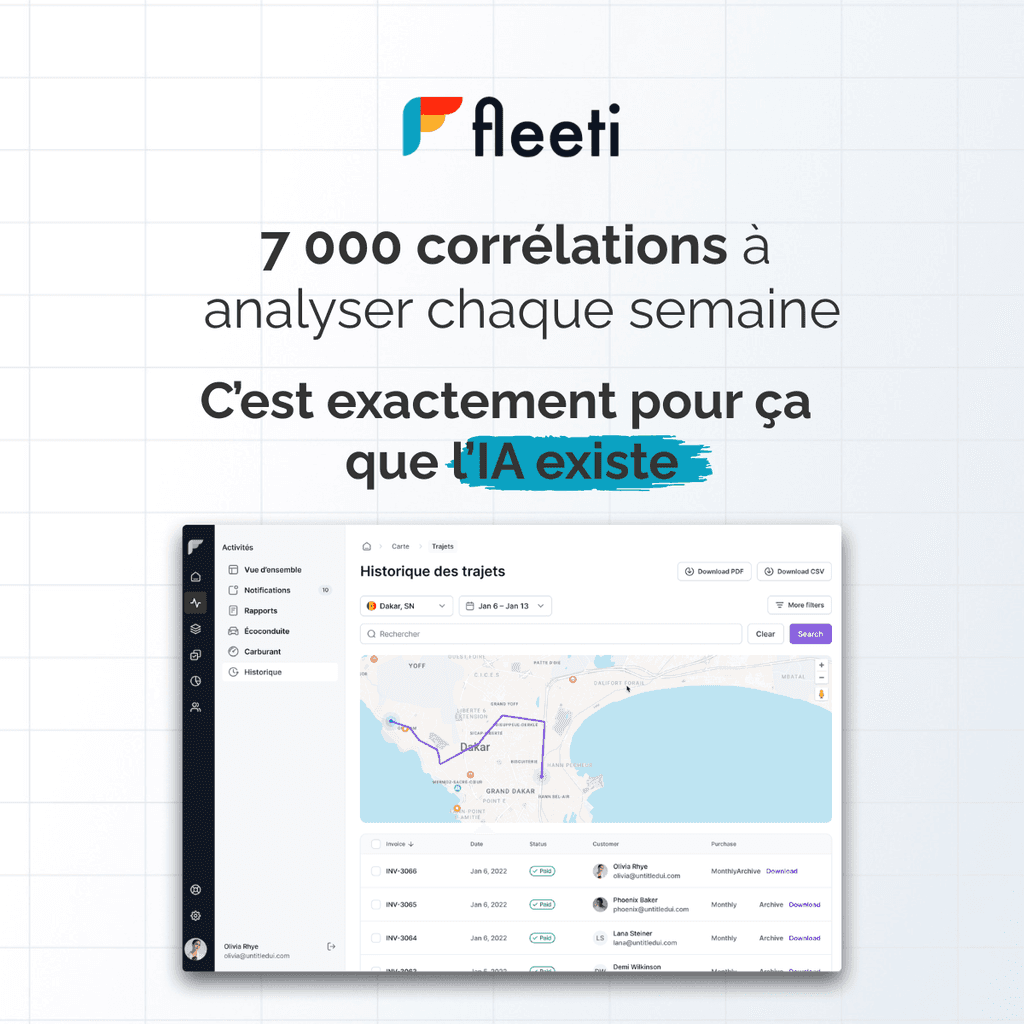
Collecting data is not enough. The value of digitization lies in the ability to centralize and leverage this information. A digital fleet management platform allows all vehicle data to be consolidated into a single tool that is accessible to fleet managers and decision-makers.
The data then becomes a basis for analysis to monitor key indicators, compare usage between vehicles or sites, and measure the impact of the actions implemented. This approach transforms fleet management into fact-based management.
Step 4: Integrate security at the heart of digitalization
The digitization of fleets plays a major role in improving safety in the field. Analysis of driving behavior, real-time alerts, and prevention tools help reduce risks and provide constructive support to drivers.
With solutions such as Fleeti Vision, video telematics complements GPS tracking to provide a better understanding of risky situations and enable targeted actions to be taken. Safety then becomes a lever for sustainable performance, rather than a constraint.
Step 5: Provide ongoing support to teams
The success of a digitization project depends as much on technology as it does on team buy-in. Training fleet managers, raising awareness among drivers, and supporting change are key elements.
At Fleeti, we favor a partnership-based approach, based on listening and providing long-term support. Fleet digitization is an evolutionary process that adapts to the realities on the ground and the company's objectives.
Fleet digitization: a driver of long-term performance
A digitized fleet allows for better cost control, improved vehicle availability, enhanced safety, and optimized field operations. By relying on reliable and actionable data, companies can move from reactive to proactive and controlled fleet management.
By 2026, fleet digitization will no longer be an option. It will be a competitive advantage for companies that want to manage their operations with clarity and peace of mind.
Conclusion
Successful fleet digitization requires a structured approach focused on usage and supported by the right tools. By combining GPS tracking, vehicle data, and field expertise, Fleeti helps companies achieve more efficient, safer, and more sustainable fleet management.
Digitization becomes a strategic lever when technology is designed for the field.
🔗 Discover Fleeti fleet management solutions: https://www.fleeti.co